By the Artificial Turf Los Angeles team · Updated
The Short Version
A professional artificial grass installation has three parts: take out the old lawn, build a firm base that drains, then lay, join and secure the turf. Most residential yards take one to three days. The turf itself goes down quickly; the base takes most of the time, and it's what decides whether the lawn still looks right in ten years.
Step by Step: How We Install Artificial Turf
- Measure and plan. We measure the area, check how water drains off the yard, find sprinkler lines, and plan the turf layout so seams fall in low-traffic spots and every roll runs the same direction.
- Remove the existing lawn. A sod cutter takes out the grass and roots, then we dig out soil to make room for the base, typically about three to four inches. The debris is hauled away.
- Deal with irrigation. Lawn sprinkler heads are capped. Lines that feed nearby plants and trees can be converted to drip so they keep getting water.
- Set the edges. Where turf meets planting beds or soil, we install a border such as bender board or concrete edging so the turf has something firm to attach to and the base stays put.
- Lay a weed barrier where the soil calls for it, to stop weeds from growing up into the base.
- Build the base. We spread crushed rock (Class II road base) or decomposed granite, grade it so water flows away from the house, wet it and compact it with a plate compactor. The finished base should be firm and smooth, with no soft spots.
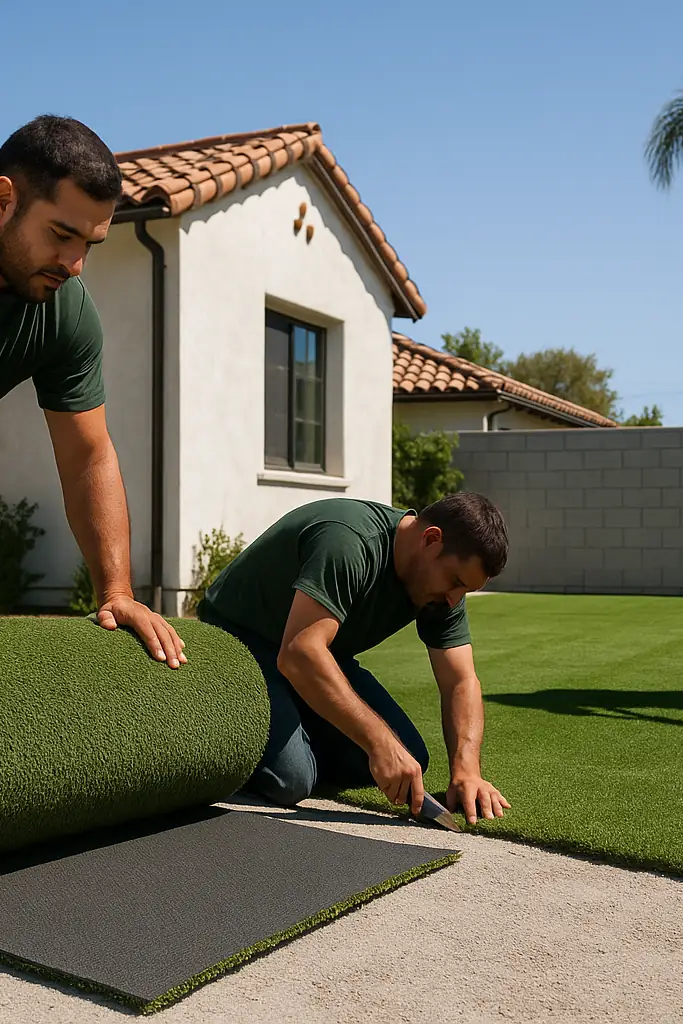
- Roll out the turf. Rolls are laid out and left to relax in the sun so wrinkles flatten. All pieces run with the grain facing the same way, usually toward the house or the main viewing spot.
- Join the seams. Pieces are trimmed along clean rows, then joined with seaming tape and outdoor turf adhesive so the seam disappears once the blades are brushed together.
- Trim and secure the edges. The turf is cut to fit and fastened along the perimeter with landscape nails or staples, or glued where it meets concrete.
- Add infill. Infill, usually silica sand, coated sand or an odor-absorbing mineral in pet areas, is spread evenly over the surface. It weighs the turf down, keeps blades upright and protects the backing.
- Power brush and clean up. A power broom works the infill in and stands the blades up. We clean the site and walk the finished lawn with you.
Why the Base Matters More Than the Turf
Most turf failures we're called to fix come from a thin, soft or badly graded base: ripples, low spots that hold water, seams that pull apart, and pet areas that smell because urine can't drain. A good base is deep enough, compacted in layers and sloped so water leaves the yard.
Common base materials for artificial grass
| Material | Where it's used | Why |
|---|---|---|
| Class II road base (crushed rock) | Most lawns | Compacts into a firm, stable layer that drains well |
| Decomposed granite (DG) | Top layer on lawns, putting greens | Fine and smooth, easy to grade precisely |
| Larger crushed rock, extra depth | Dog runs, poorly draining clay soil | Moves water down and away faster |
| Shock pad | Over concrete, rooftops, play areas | Adds cushioning and drainage where you can't dig |
Ask any installer how deep the base will be, what it's made of and how it's compacted. If the answer is vague, that's where the savings in a cheap quote usually come from.
Installing Turf on Concrete, Rooftops, Slopes and Around Trees
- Over concrete or pavers: no digging, but the slab must already drain. We add a drainage or shock pad underneath and glue the turf at the edges. See rooftop and patio turf.
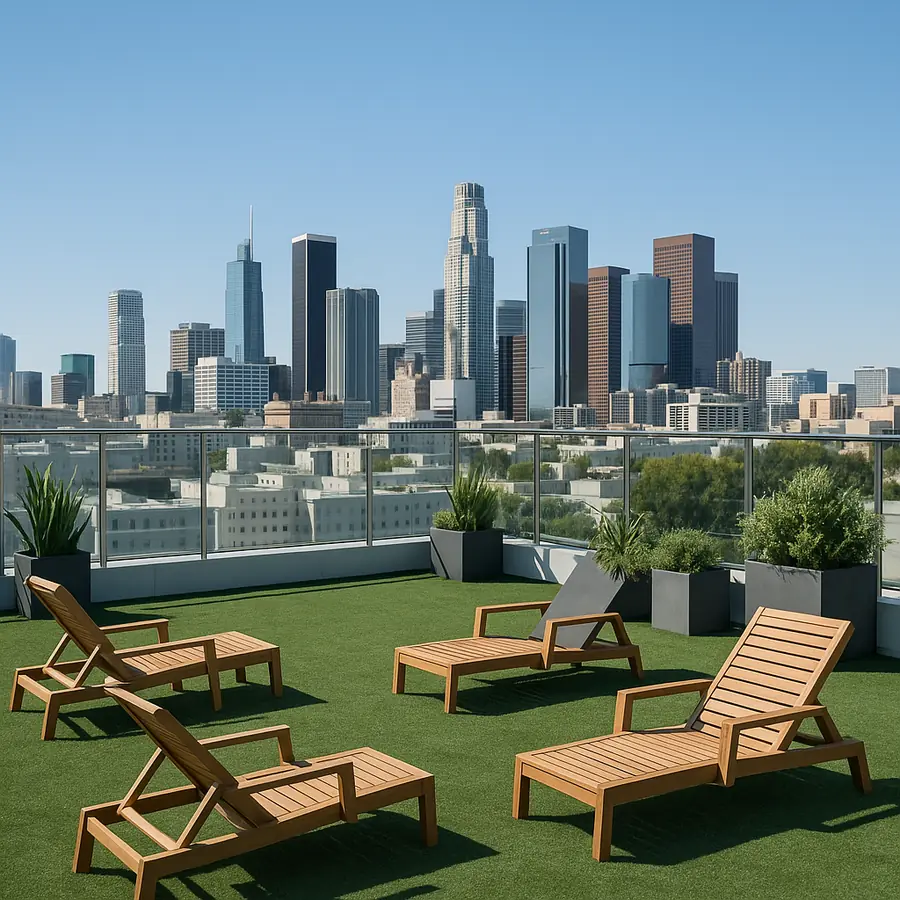
- Rooftops and balconies: weight limits, roof drains and waterproofing come first. Turf is laid on a pad and held with adhesive or weight, never nails.
- Slopes: the base is stepped or stabilized and the turf is secured more closely so it doesn't creep downhill.
- Around trees: we keep the base shallow over surface roots and leave space at the trunk so the tree keeps getting air and water.
- Next to pools: turf meets the coping cleanly, and we pick a product that handles splash water and chlorine.
DIY vs. Hiring a Professional Installer
A small, flat area such as a balcony or a little side yard is a reasonable DIY project. Larger lawns are harder than they look, mostly because of the base and the seams.
DIY vs. professional artificial turf installation
| DIY | Professional | |
|---|---|---|
| Cost | Materials only, plus tool rental and haul-away | Materials, labor and disposal in one price; see typical costs |
| Tools | Sod cutter, plate compactor and power broom (rental), knives, seaming tape, adhesive | The crew brings everything |
| Time | Several weekends for an average yard | One to three days |
| Hardest parts | Removing and hauling soil, compacting an even base, invisible seams | Done daily by experienced crews |
| Warranty | Manufacturer warranty on the turf only | Turf warranty plus a workmanship warranty |
If you go the DIY route, spend your effort on the base. Turf laid over loose soil looks good for a few months, then shifts and ripples.
Questions to Ask Before You Hire an Installer
- How deep will you dig, and what goes in the base?
- How do you compact the base, and in how many layers?
- How will the yard drain, especially near the house?
- Which turf product is it? Can I see the spec sheet (face weight, pile height, backing)?
- How are seams joined and edges secured?
- What infill do you use, and how much?
- Is hauling away the old lawn included?
- Do you use your own crew or subcontractors?
- What does the warranty cover, in writing?
- What's your CSLB license number?
Our printable quote checklist covers the same points side by side.
Before Install Day in Los Angeles
If you're in an HOA, get approval first; many associations want to see a sample and a plan. Front-yard and parkway turf can be subject to local rules, and most local lawn-replacement rebates exclude artificial turf. Our homeowner's guide covers HOAs and rebates, and your city page lists the water provider and local notes.
Want a plan for your own yard? Book a free on-site quote and we'll measure, check drainage and bring turf samples.
Outside links open in a new tab; we review them regularly.