By the Artificial Turf Los Angeles team · Updated
Is Artificial Grass Good for Dogs?
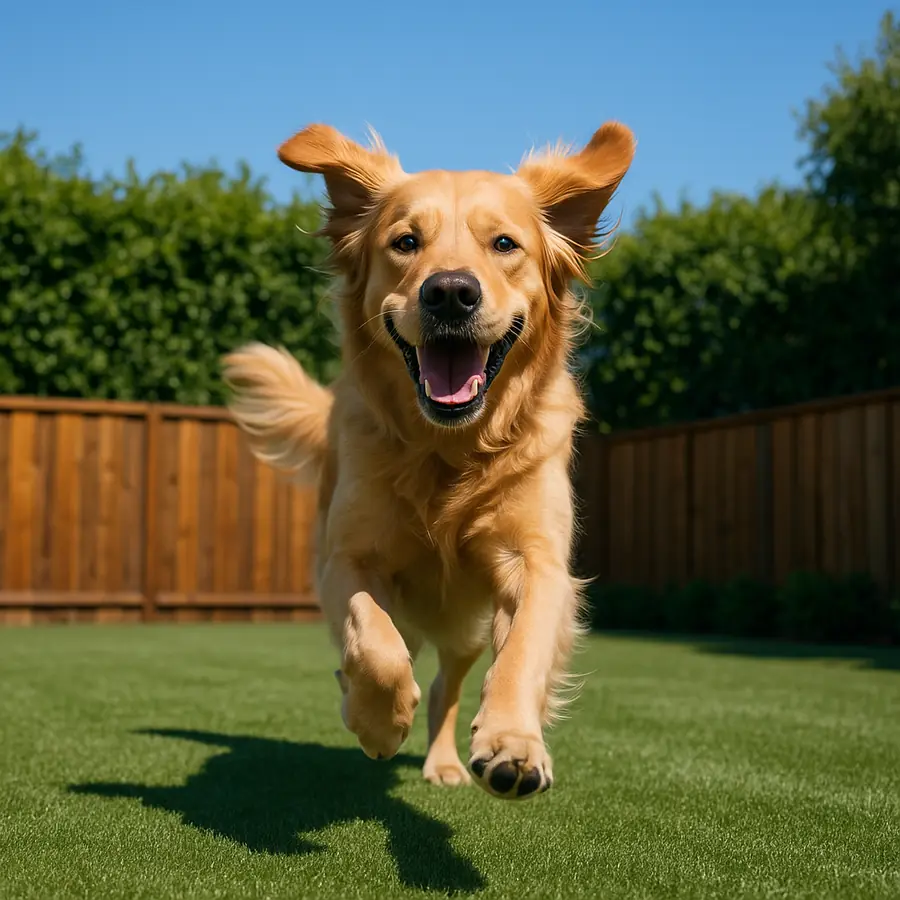
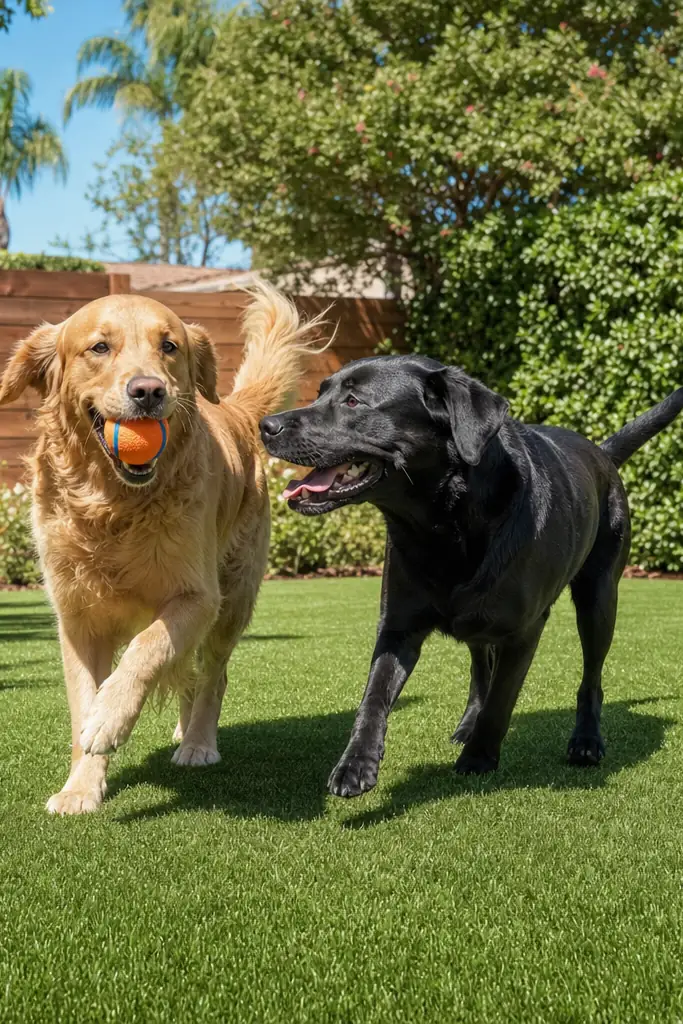
For most dog owners, yes, as long as it's built for pets. Dogs and natural lawns don't mix well in Los Angeles: urine burns yellow spots, dogs dig, and every rain turns the yard into mud. Pet turf solves those problems. It also brings two new ones, heat and odor, and both come down to choosing the right product and base. Here's what to know before you buy.
The Pros of Artificial Grass for Dogs
- No mud or dirt. Paws come in clean after rain, and the yard is usable right away.
- No yellow spots. Urine doesn't burn turf the way it kills grass.
- No holes. Diggers can't tunnel through a compacted base.
- Fewer pests. No moist soil and tall grass means fewer fleas, ticks and foxtails, a common hazard in dry LA yards.
- No watering or mowing. The lawn stays green through summer watering restrictions.
- Durable. Dense pet turf stands up to running, playing and zoomies.
The Cons, and How to Handle Them
Problems with artificial grass for dogs and how to fix them
| Problem | Why it happens | How to avoid it |
|---|---|---|
| Odor | Urine doesn't drain fast enough, or residue builds up | Flow-through backing, a free-draining base, odor-absorbing infill, regular rinsing and enzyme cleaning |
| Heat | Any surface in direct sun warms up, turf more than living grass | Shade over part of the area, cooling infill, a quick hose-down on hot afternoons, and checking with the back of your hand before letting dogs out |
| Chewing and digging at edges | Loose or exposed edges invite it | Edges secured tightly and finished against a border |
| Upfront cost | Pet turf, extra base and special infill cost more than a standard lawn | Size the dog area to what your dog actually uses; it pays back in water and upkeep |
| Not a natural surface | Some dogs take a few days to get used to it | Most adjust quickly, especially with praise and the old potty spot moved onto the turf |
The Best Artificial Grass for Dogs
The best pet turf isn't the softest or the most expensive. It's the one that drains fastest and stands up to wear. These are the specs we look at for dog areas:
What to look for in artificial grass for dogs
| Feature | Best for dogs | Why |
|---|---|---|
| Backing | Flow-through (permeable across the whole surface) | Drains urine and rinse water far faster than hole-punched backing |
| Pile height | Shorter, around 1 to 1.5 inches | Easier to clean, and solids are easier to pick up |
| Density | Higher face weight | Holds up to running and doesn't mat down as quickly |
| Blade shape | W- or S-shaped, resilient fibers | Springs back after heavy traffic |
| Infill | Antimicrobial coated sand or an odor-absorbing mineral such as zeolite | Controls odor between rinses; avoid crumb rubber in pet areas |
| Base | Deeper, free-draining crushed rock | Moves urine down and away instead of letting it pool |
| Safety | Lead-free turf and non-toxic infill | Dogs lie on it, roll on it and sometimes chew it |
Ask for the drainage rate on the spec sheet and compare it between products. Our turf specs guide explains each line.
Dog Runs and Side Yards
Many LA homes don't need the whole yard turfed for the dog. A side yard or a corner dog run often does the job at a fraction of the cost. A few things make a dog run work:
- A hose bib nearby, so rinsing takes a minute.
- A slight slope toward a drain or planting bed, never toward the house.
- Some shade from a tree, shade sail or the house in the afternoon.
- Enough room to turn and run: most dogs use a run of at least 6 to 8 feet wide.
- A firm edge along fences, where dogs patrol and dig.
Keeping Pet Turf Clean and Odor-Free
Pick up solids daily, rinse the main potty spot every few days (daily in a heat wave) and use a turf enzyme cleaner monthly, or weekly in summer. Check that water drains through quickly when you rinse. Our turf cleaning guide has the full routine, including stains and what not to use.
Is Artificial Grass Safe for Dogs?
Quality pet turf is lead-free, and pet infills are non-toxic. The main safety issue is heat: on a sunny summer afternoon, turf can get hot enough to be uncomfortable for paws. Press the back of your hand on it for a few seconds; if that's uncomfortable, it's too hot for your dog. Rinse it down or let your dog out in the morning and evening. Discourage chewing at edges and seams, and pick a dense product with tightly secured edges if your dog is a chewer.
What Pet Turf Costs in Los Angeles
Dog runs and pet areas usually fall in our $18 to $26 per square foot range installed, because of the flow-through turf, deeper base and odor-control infill. A 300 square foot side-yard dog run comes to roughly $5,400 to $7,800. See artificial grass cost per square foot and the calculator, or learn about our pet turf installs.
Outside links open in a new tab; we review them regularly.